
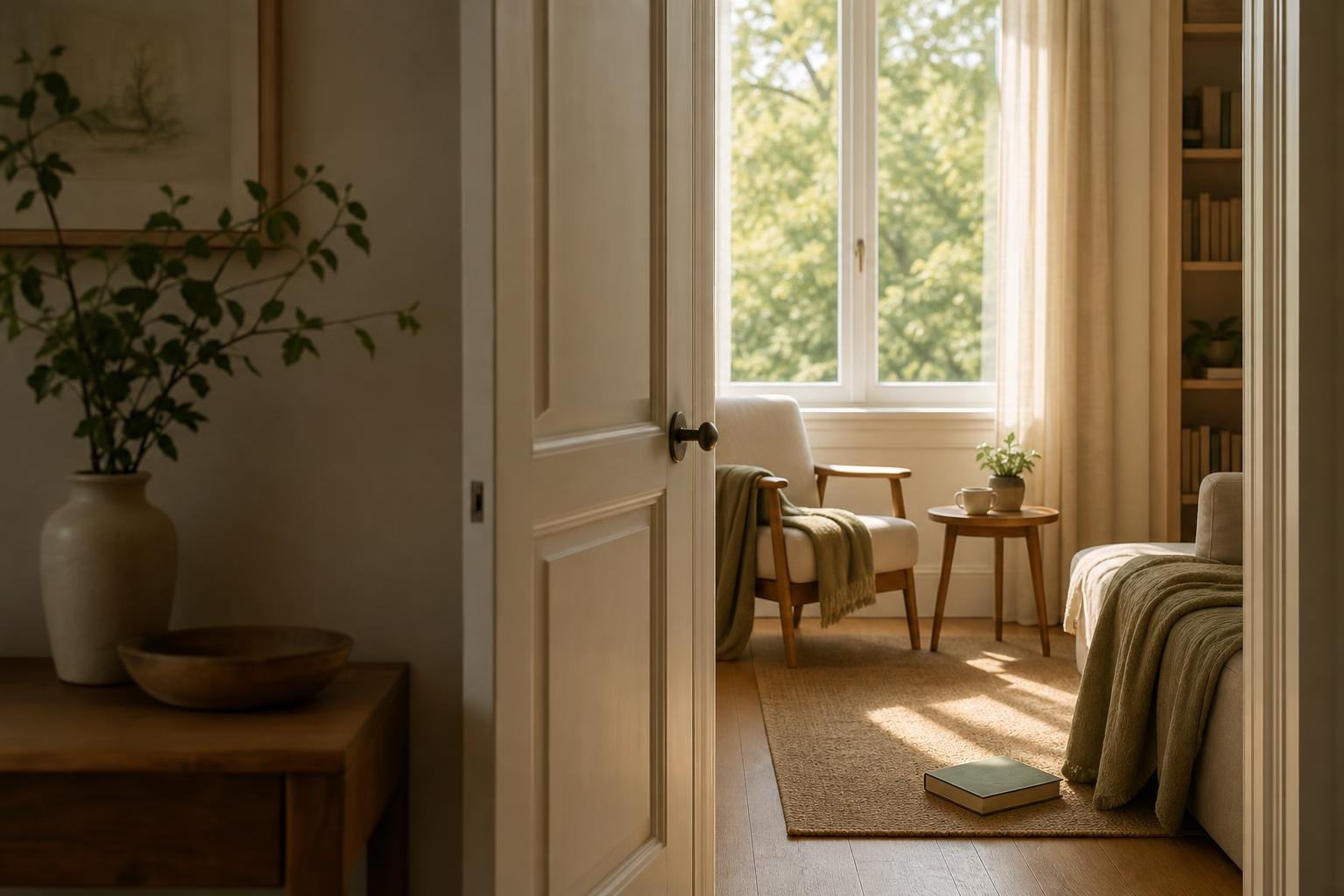
A friend texts to ask if they can drop by. You would like to see them, but not tonight. The living room is untidy, dinner is still on your mind, and you were looking forward to an hour with a book. None of that means you care any less about your friend. It means your home is also where you spend time that belongs to you.
In astrology, Cancer is often associated with home, belonging and care. As an archetype, it offers a useful question: what does it take for a place to feel welcoming without leaving the people who live there with no room of their own? That question is open to anyone, whatever their sign.
Caring for a home includes caring for its boundaries
The familiar image of Cancer as a nurturing host can be appealing: a warm room, something to eat, a sense that people are welcome. But a home cannot always be open to everyone. A person may enjoy cooking for friends and still prefer an invitation to be arranged in advance. They may share a bedroom, a kitchen or a sofa without wanting every conversation, object or hour to be shared as well.
This is where the Cancer archetype becomes more interesting than a personality label. Caring for a home can mean noticing what makes it comfortable for the people who use it every day. Sometimes that calls for company; sometimes it calls for a closed door. Neither choice makes someone more or less caring.
It is especially worth moving past the cliché that a wish for privacy is a sign of being “too sensitive.” Wanting to choose when people enter your space is an ordinary preference. So is wanting to know whether a guest will stay for a quick cup of tea or the whole evening. The point is not to defend every preference as a rule everyone else must follow. It is to make it possible to discuss preferences before resentment builds around them.
What boundaries look like in an ordinary week
Shared space, private things
In a shared home, the kitchen table may belong to everyone, while the notebook left on it does not. A room can be used by several people without making every drawer, shelf or screen communal. These distinctions are often small enough to go unspoken—until someone moves an object or walks in at the wrong moment.
Clear requests tend to help more than a vague instruction to “respect my space.” You might say, “Please ask before borrowing things from my desk,” or “I’d like to keep this shelf for my own books.” The other person can then say what they need, too. If the space is limited, the solution may be modest: a particular chair, a drawer or a stretch of time when the table is free.
Visitors are a shared decision
An invitation can affect everyone who lives in a home, even if only one person knows the guest. That does not mean every visit needs a formal meeting. A quick message—“Would tomorrow evening work if Sam comes over?”—can give someone else a chance to mention plans or ask for a quieter night.
It also helps to distinguish between welcoming someone and being available at any time. “I’d love to catch up, but could we plan for the weekend?” is an invitation with a boundary, not a rejection. If you are the person hoping to visit, accepting that answer without asking for a detailed justification makes the next invitation easier for both of you.
Time alone needs a place in the schedule
Privacy is not always about a door. It may mean making tea without starting a conversation, reading while another person watches a film, or spending an evening at home without guests. Even people who enjoy company can value stretches of time when they are not expected to respond.
This is easier to arrange when “I’d like some time to myself” is treated as information rather than a verdict on the relationship. A specific request helps: “I’m going to read for a while; can we talk after dinner?” It gives the other person a clear expectation without turning a simple need for quiet into a long explanation.
Boundaries work better as conversations
One person’s idea of a welcoming home may be an open door and spontaneous visits. Another’s may be knowing who is coming and when. Neither preference has to win every time. The practical question is how to make room for both when people share a household or spend a lot of time in each other’s homes.
Start with the detail that causes friction. Is it the unexpected knock, the length of a visit, borrowed belongings or conversation late in the evening? A specific issue is easier to discuss than a broad claim that someone is “always around” or “never welcoming.” Then ask what would make the arrangement workable. Perhaps friends are welcome with a little notice, or a shared room stays quiet at a certain time.
Agreements may need revisiting. A plan that suited a quiet week might not suit a busy one, and an occasional exception need not erase the usual arrangement. The aim is not a perfect household policy. It is a way of saying what matters without asking others to guess.
What helps you feel at home?
Cancer’s association with home can be a prompt to look beyond cushions, meals and hospitality. Feeling at home may also involve knowing that you can shut a door, decline a visit or sit beside someone without having to talk. You do not need to be born under Cancer to recognise any of those wishes.
Consider one question: what helps you feel comfortable in your space, and which part of that needs a conversation with someone else? Your answer might concern a room, an object or simply an hour of your day. Giving it words is often a better starting point than hoping the people around you will already know.