
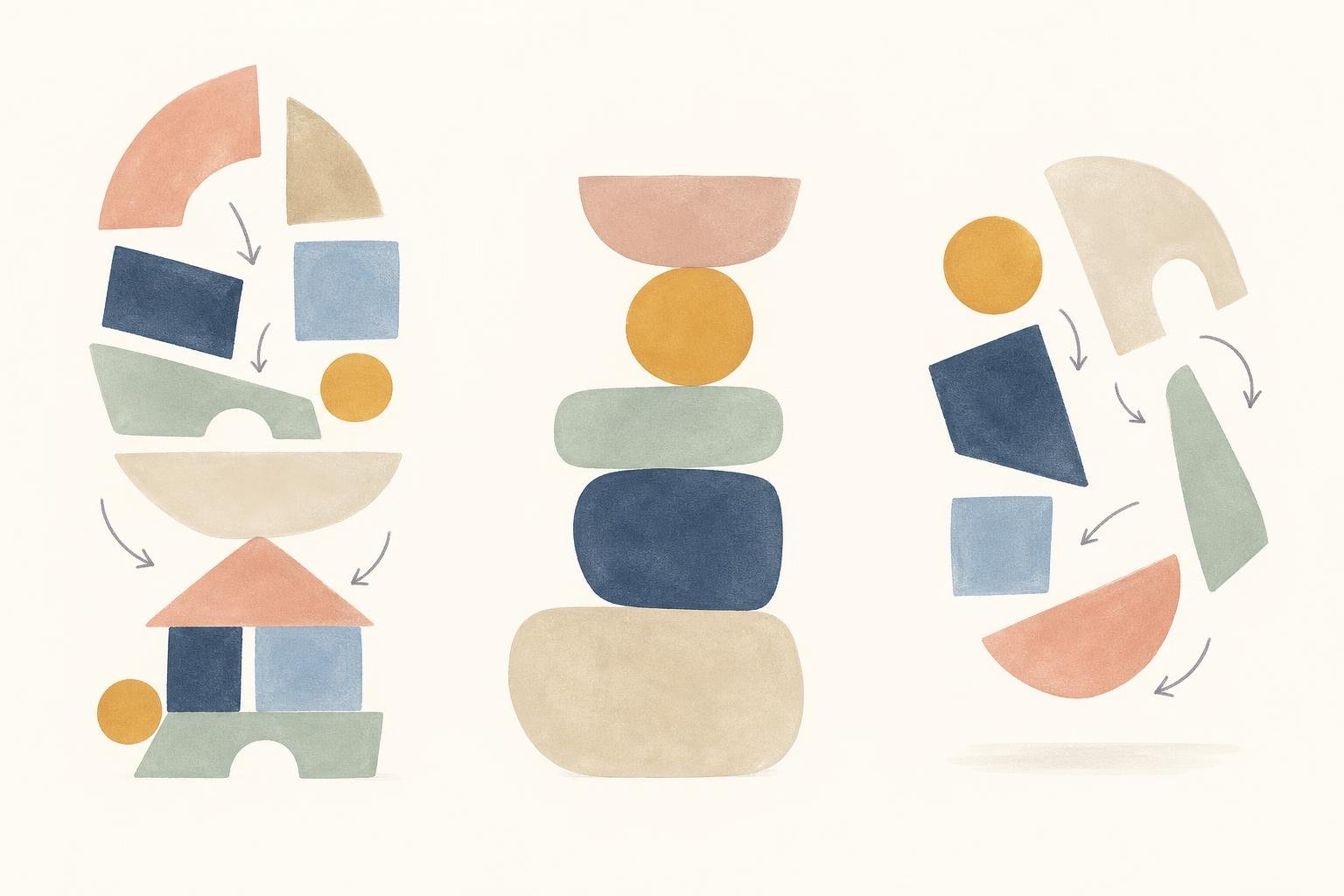
Astrologers use modality to describe how a sign relates to movement and change. There are three modalities: cardinal, fixed and mutable. A useful shorthand is start, sustain, adjust. They offer different questions to ask of a chart, not three kinds of people to sort everyone into.
This is part of astrology’s interpretive vocabulary, not a scientifically established explanation of behaviour. Its value as a reading tool lies in the distinctions it helps us make. “Something is changing” is a broad statement; asking whether the focus is on beginning, maintaining or adapting makes it more precise.
Cardinal: What is beginning?
Cardinal is the mode of initiation. In a reading, it draws attention to the point where something takes shape: a decision is made, a conversation is opened or a first step becomes possible. The emphasis is on setting things in motion rather than knowing every detail of the outcome.
Imagine a group that has talked for weeks about organising a shared project. A cardinal question would be: Who will propose a plan, and what needs to happen first? It does not require a dramatic leap. Sending a message to agree on a meeting time can be a perfectly ordinary beginning.
The word can be misleading if it is treated as praise for constant action. Starting is only one part of doing something well. A first step might clarify what is needed, or it might reveal that the idea needs more thought. Cardinal symbolism gives the beginning its own place in the discussion; it does not declare that moving first is always best.
Fixed: What is worth maintaining?
Fixed is the mode of continuity. Its question is less “How do we launch this?” than “What helps it hold together?” In a chart reading, it can put the focus on commitments, routines or priorities that need sustained attention. It can also prompt a closer look at what someone is trying to preserve.
Return to the shared project. Once the plan exists, people need a way to keep their agreements, divide recurring tasks and remember why the project matters. Those are fixed questions. Without that work, an energetic start may not amount to much.
Fixed does not simply mean stubborn. Keeping a useful arrangement in place can be thoughtful; keeping an unhelpful one merely because it is familiar is a different matter. The distinction comes from the situation, not from the label. An interpretation becomes more useful when it asks what is being held steady and why, instead of assuming that persistence is either a virtue or a flaw.
Mutable: What needs adjusting?
Mutable is the mode of adaptation. It comes into view when circumstances, information or needs shift. The key question is: What can be revised without losing sight of the point?
Suppose the group discovers that its original meeting time excludes several participants. A mutable response might be to change the schedule, try a different format or ask what the plan overlooked. That is not the same as abandoning the project. It is a way of working with what has been learned since the start.
Nor does mutable automatically mean indecisive. Revising a plan can take care and attention, just as refusing to revise one can sometimes have good reasons. In a reading, mutable symbolism is most helpful when it opens a specific question: which detail has changed, and which part of the plan can change with it?
What the three modes add to a reading
The modalities work well together because they keep an interpretation from collapsing several tasks into one. Consider a familiar sentence: “I need to make a change.” The three modes turn it into three more workable questions:
- Cardinal: What needs a clear first step?
- Fixed: What is already working and deserves continued support?
- Mutable: What needs to be updated in light of new information?
A reader can use these questions when discussing a theme in a chart, without claiming that the chart supplies the answer. For example, a discussion about a creative project might initially centre on getting an idea off the ground. Later, the more useful conversation may concern how to make time for it regularly. At another point, a change in available time may call for a smaller, revised version of the plan. The project is the same; the question has changed.
This is also why a modality should not be read in isolation. It names a style of emphasis within an interpretation, not a complete account of a situation. If an astrologer describes a theme as fixed, the next step is to ask what continuity means here, rather than assuming the word settles the matter.
A vocabulary, not a personality test
It is tempting to turn the three words into character sketches: the starter, the dependable one and the flexible one. That shortcut loses the most useful part of the framework. People begin things, keep things going and change course in different settings. No single modality can tell you which of those they do best, or how they will act in a particular relationship, job or decision.
The three modes are not a ranking, either. An initiative needs a start, but it may also need patience and revision. Holding a boundary can matter as much as opening a discussion; changing an arrangement can matter as much as honouring the original agreement. The sensible question is not “Which mode is better?” but “Which question helps me understand this situation?”
If you want a quick way to remember the distinction, keep the verbs: start, sustain, adjust. They make modality easier to read while leaving room for the details of real life, which rarely fit neatly into one word.